Showing posts with label Fuji. Show all posts

Monday, June 30, 2014

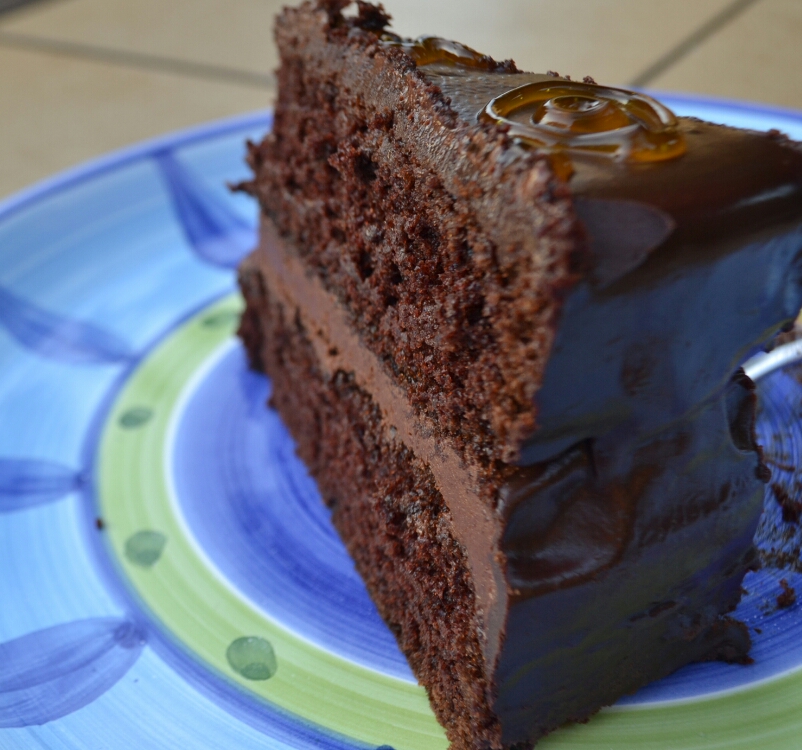
Chocolate cake

Perfectly chocolate cake,
Chocolate.

I recoil ever so slightly when, upon finding out I'm into cycling, an "ah-ha" moment washes over people wondering how I lost and keep off all this weight. Scanning for some sort of easily explainable reason I could possibly drop more than 70 pounds, they finally pounce on the fact that I ride a bike, and to them, it explains it all.

"Oh, so that's how you stay so thin," they'll say, or some variety.

What a strange time and space we occupy where it's simply unbelievable that someone could lose a ton of weight without being on some strict diet or being a kettle-bell throwing fitness freak.

I understand, I guess. It's part of the world we live in. Everyone wants to know the shortcut, because everyone uses the shortcut. And I guess it would be disingenuous to say that cycling has had nothing to do with losing weight. It obviously has. I lost a considerable amount of weight before I even bought the Peugeot, though, and I'm convinced that all these CrossFit crazy people are at least slightly misguided. I think keeping trim is mostly about eating right. Just look at that food pyramid the doctor always told you about, and that's sort of my guide.

Sometimes I do feel like the miles I put on my bike do, shall I say, allow for some slop in the system, however, and that brings me to chocolate, my true love. My middle guy's birthday cake request was chocolate cake with a ganache frosting. Yes, my 10-year-old requested ganache as his topping.

Who am I to argue? I went to my go-to. What recipe is that, I am always asked? I proudly tell them it's the "Perfectly Chocolate Cake" recipe on the back of the Hershey's Cocoa label. I actually find product recipes to be some of the best there are. For example, there' s a great recipe for cookies on the back of Reese's Pieces.

I've often considered making a different chocolate cake, but the label really is truth in advertising: it's perfect, and I just can't bring myself to mess with it. There's an odd step at the end with boiling water that I don't understand, but why question it?

The only audible I called was my son's request for the ganache. I just poured hot cream over about 8 ounces of semi-sweet chocolate, and that was it. I made the "Perfectly Chocolate Frosting," which is also on the back of the cocoa container, and used a whole cake's worth in between the cakes.

The cake is delicious. I know restaurant food is a different way of cooking, but this cake is something I would put up against anything in any bakery. I'm not bragging--it's simply that good. It's moist (I think that's the boiling water part), and unlike box cake, it tastes like chocolate. That's the thing about from-scratch baking with chocolate. The end result ends up tasting like chocolate. A little bitter, a lot sweet, a little coffee-ish.

So I had a huge slice and part of a few others, and it felt wonderful and right and why would you ever want to deprive yourself of something like that?

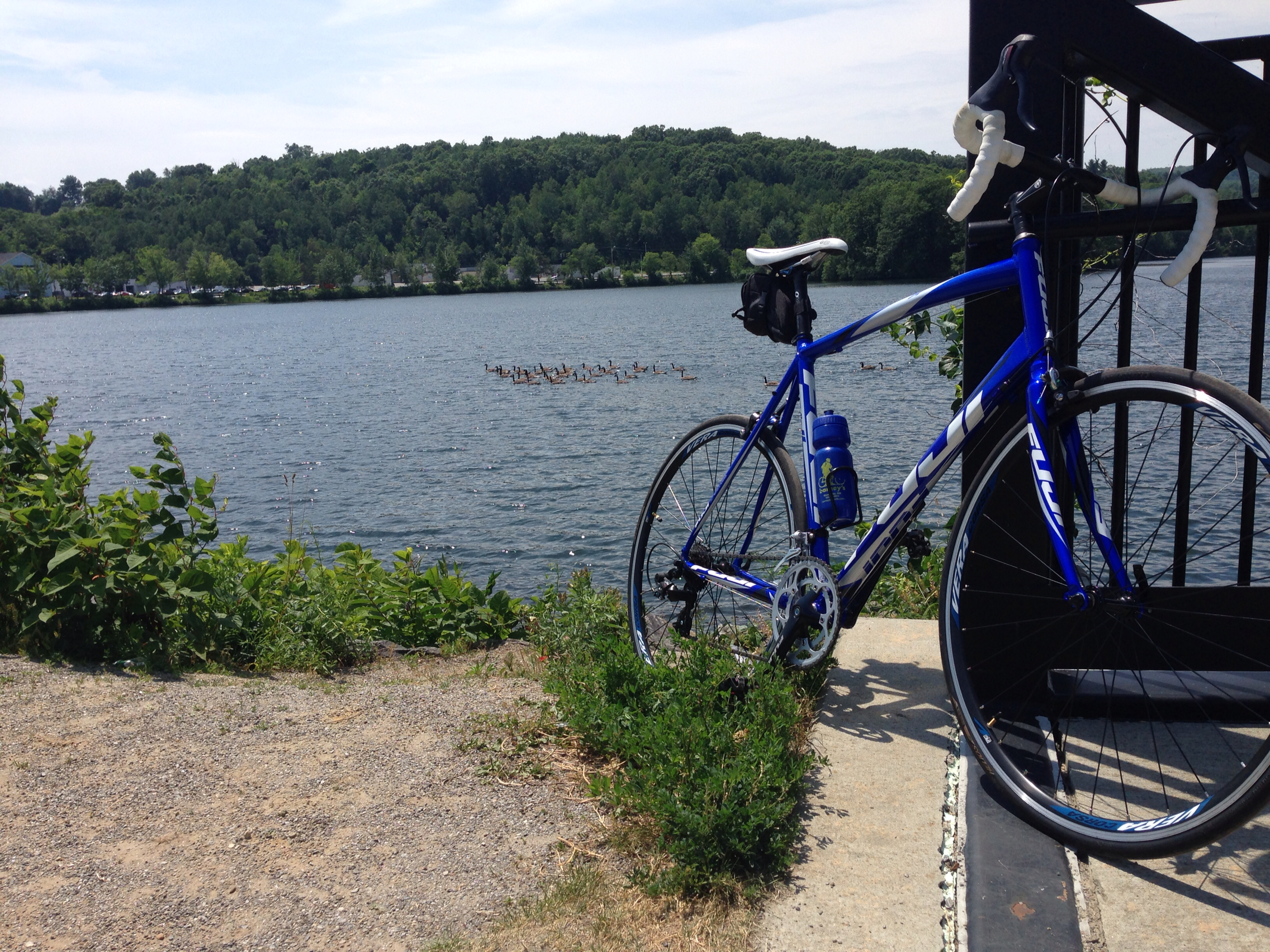
Coes Pond
Check out the geese in the background. Coes Pond, Worcester, Mass.
Yes I rode yesterday and today, but not in some frantic race to balance out what I ate. I rode because I wanted to ride my bike. If it happens to absorb the dietary blow of eating wonderfully good food, then that's a bonus. I suppose that's one of the great things about cycling--it's a hobby that's actually incredibly good for you.

Sunday, June 8, 2014

The end of the tunnel

Tunnel

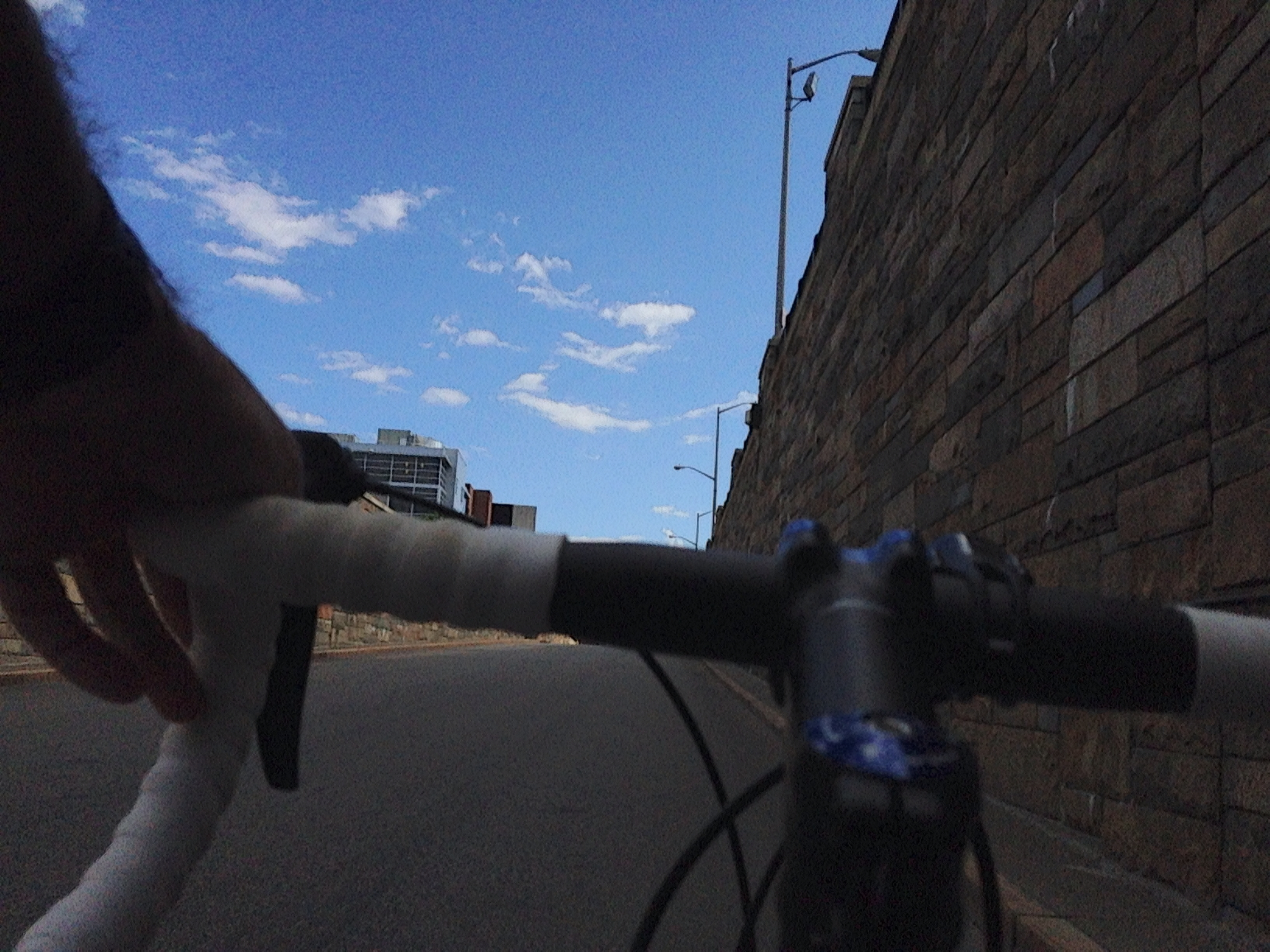
The Ernest A. Johnson Tunnel is a short little bypass of Lincoln Square that squirts you out onto Main Street from under Lincoln Square. It's a superfluous road in a section of the city that doesn't really need a tunnel, but I love it, for no other reason than there's something viscerally cool about a tunnel.

My favorite part of riding through the tunnel is coming out of it. That contrast of dark and light just adds, I don't know, something theatrical. It makes it an event.

It's fun, and the general rule I employ is that if it's fun, it's fun on a bike, too. I have been looking for new places to take the Fuji and I have enjoyed every inch I've traveled on my shiny new bike. It has truly been a great experience, and it has only been a few weeks.

Saturday, May 31, 2014

New bike.

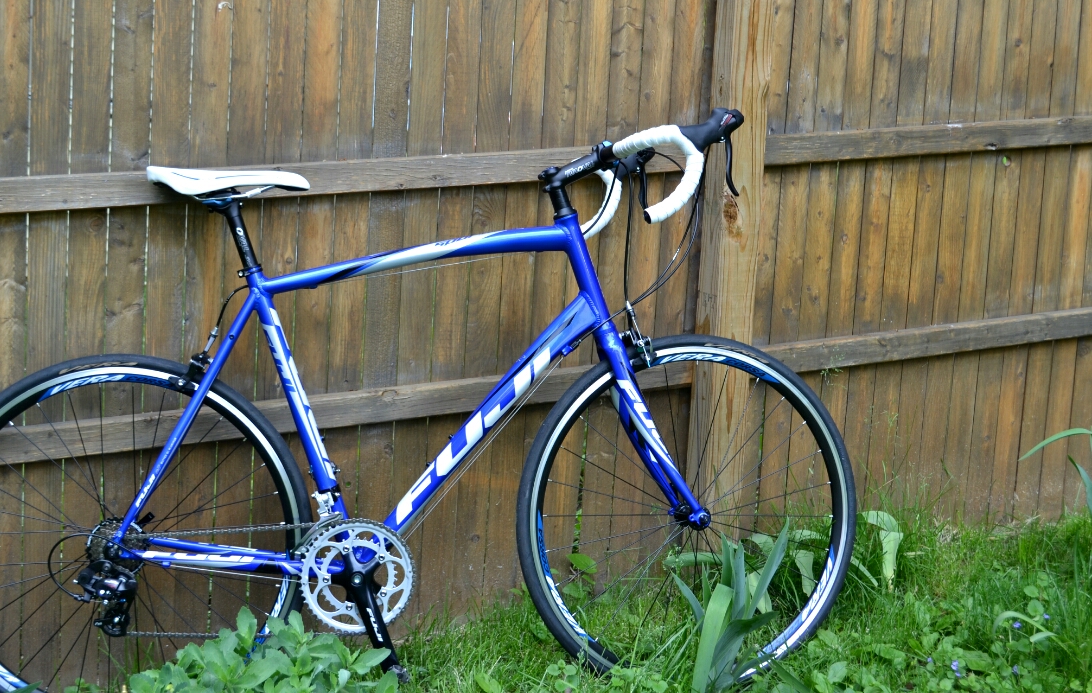
Fuji Sportif 1.7

"And then you just press this button with your thumb to go toward the harder gears," said Peter, the owner of Barney's Bicycle, said as he demonstrated how to use the integrated brake/shifters.

I'd love to say that with that simple, bike jargon-free explanation, he sealed the deal with me on the stunning new Fuji Sportif 1.7. That's almost exactly what I say to my son when riding with him and trying to get him in the right gear. Make it harder. Make it easier. I have no idea what high gear or low gear or what numbers they are.

But by then, I had already made up my mind in two ways--I was leaving that bike shop with a bike that day, and Barney's had sealed the deal months ago.

Barney's operates a new bike shop at Park Avenue and Coes Street, and keeps open its old shop for used sales and repair (It's called "Chandler Bike" now). Chandler Bike is a revelation. The used bikes, I have come to realize, are ridiculously overpriced. But they have an impressive array of do-dads and oddball parts in all different sizes for even the most obscure projects. They are friendly and courteous, and humor people like me who have the most harebrained ideas with the most godforsaken bikes.

The good service extends to the new store, as well. They have no qualms about selling you a few bearings or cable crimps or bar end plugs. It's a nice, airy place to be.

So once my wife gave me the go-ahead, I knew my first-ever new bike experience at a bike shop would be Barney's. I don't have much experience with other bike shops, but I enjoy the easy-going feel to the place. It lacks any hit of the elitism that infects so much of the cycling world.

The Fuji was the cheapest road bike available at Barney's. I wasn't necessarily approaching it that way, but it was certainly a factor. I wish they had more options in my price range, but I guess that was the compromise I made when I decided I wanted to buy the bike from a particular shop. That said, it appeared to be a good deal on that particular bike.

It sports Shimano Tourney-level shifting and braking components. That's the lowest teir of Shimano's offerings, surely scoffed at by the carbon fiber types. But it's all relative. The Peugeot is a friction-shifting 10-speed mountain bike made in France in the early 1980s. The light years of progress I made just by moving up to modern braking and indexed "brifter" shifting give me no real reference point from which to judge. I just know it's better.

And that's how I wanted it, in many ways. When I bought the Peugeot two years ago, I wanted a used, basically functioning bike to re-learn cycling on. Some part of me wanted to "learn the old ways" so I got a full appreciation of how a bike worked and functioned.
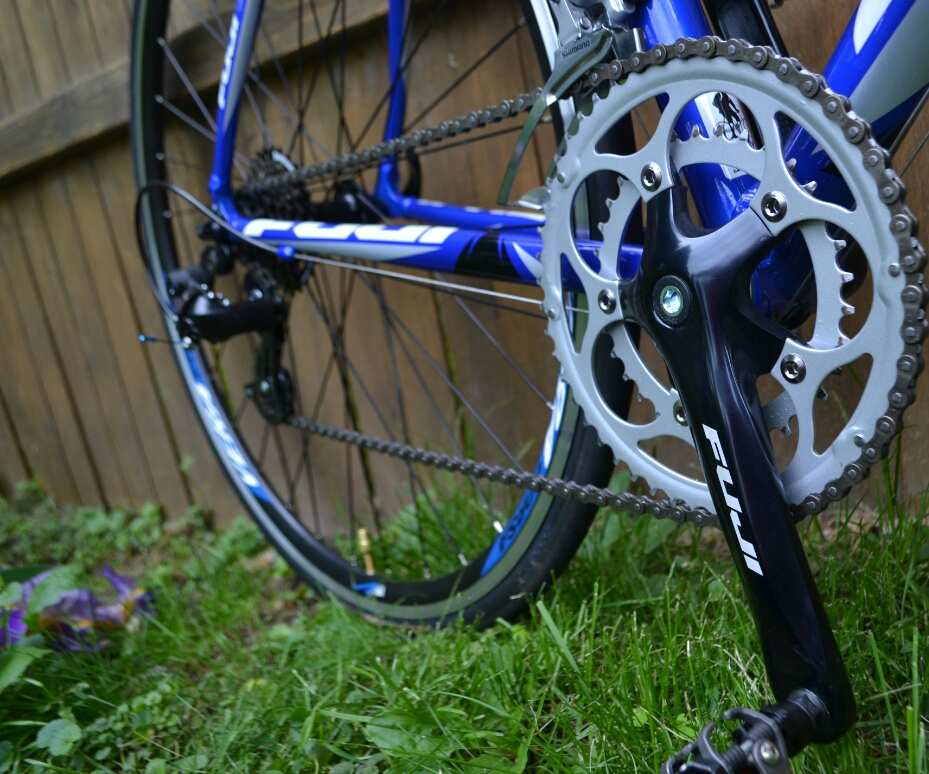
Fuji crankset
Friction made me a better rider, I think. It requires much more organization and planning about what gear you want to be in at any point in time. It's a deliberate, gradual mechanical system that relies a lot on feel. Does it feel like the chain is solidly in gear? Do I need to trim it back a little? Is it worth shifting right now?

I absolutely love the new system. Shifts are smooth and crisp, and it's an easy system to learn on. It becomes intuitive after one ride, and I'm impressed with how the front derailleur action, typically the toughest part of shifting, functions. If I had to guess the difference between the Tourney set I have and something like Ultegra or Dura-Ace, it's probably something to do with more crispness, maybe faster shifts, or maybe a more robust feel. But who knows? Maybe I'll find out someday.

What I really love about the Fuji is the frame. It's beautiful to look at, and that blue paint was a major draw. Bikes seem to be either black or white or silver these days; I specifically wanted a splash of color. I am going to have to ride this bike every day; I want it to be pleasant to look at. 

From what I've read about the Fuji Sportif, the all-aluminum frame is the same geometry as the high-end carbon Fuji Gran Fondo. It leans toward the comfort end of the road bike spectrum, and I can confirm it's a spectacularly comfortable bike.

It's a big bike, at 59 cm, but I wanted it that way. It feels like I can really stretch out while riding it, although on the hoods I perhaps stretch a little too much. I may try a slightly shorter stem (the XL Sportif employs a 110 mm stem, which is pretty long), which I think will make it perfect.

It rides quiet and smooth and light, and again, it's all relative. But I can't seem to get enough of my new blue Fuji. I took it up over Aiport Hill the other day, which two years ago I would never have even attempted. I never felt that nervousness that I was going to stop or fall over or go backwards. The bike just pulls, and I think I finally realized what bike dorks talk about when they say "acceleration."
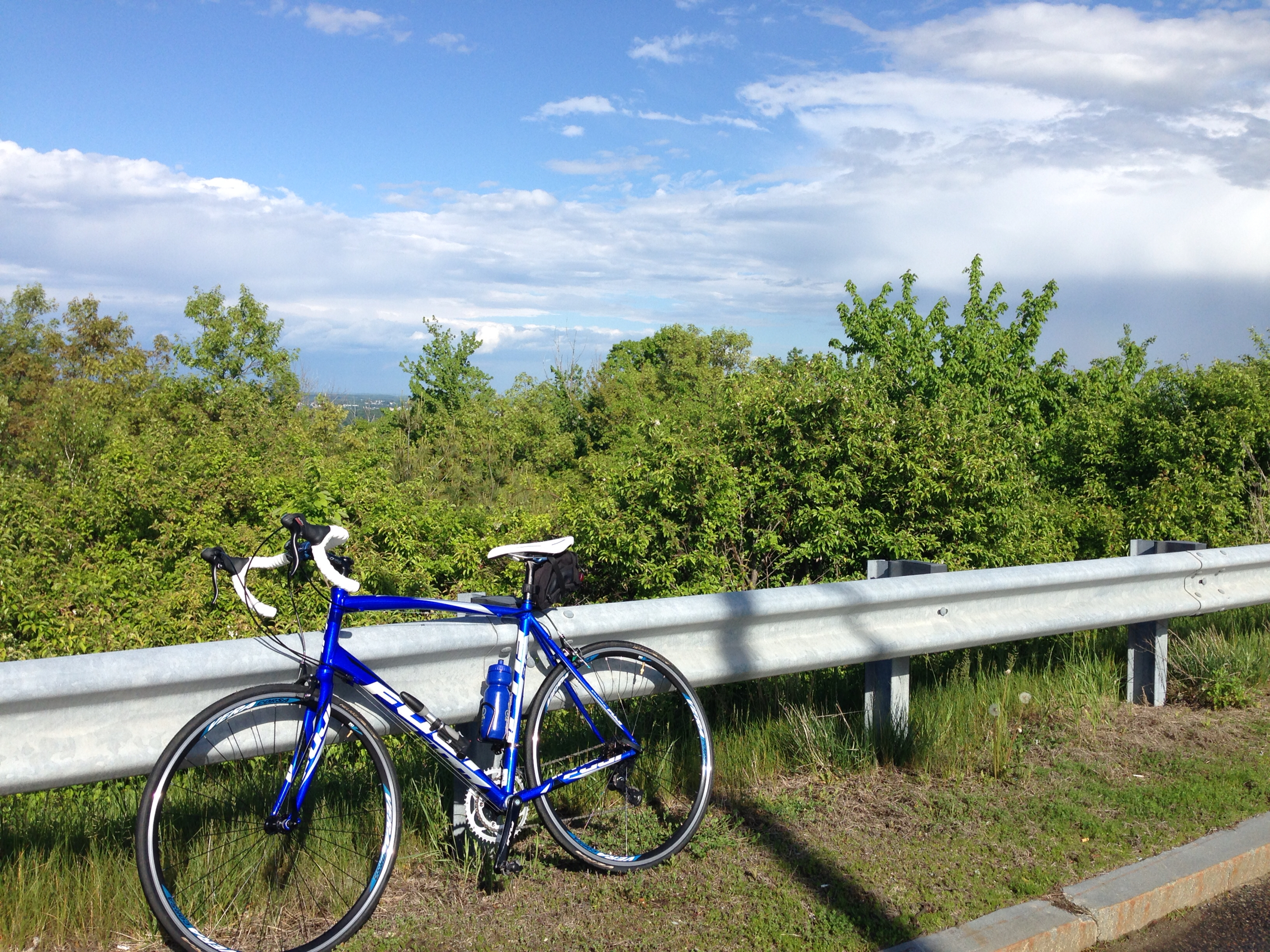
Airport Hill on the Fuji
Worcester has famously bad roads, and I cringed a few times going over some unavoidable ruts. The Fuji has an aluminum fork, which is fine, but I immediately realized why the bike dork community always recommends chrome-moly or carbon forks. They just soak up the bumps better.

It's a great bike, but then again, I think the conventional wisdom these days is that most new bikes made today are great bikes. Of course it's more than that. This awesome little bike is a dream realized. Something I visualized happening. It represents my full immersion into something I've become quite passionate about. I love riding my bike, and I love bicycles. I love what they've done for me, physically and mentally, and I love what they represent about life, society, and good, healthy living. There's nothing like the sights, sounds, smells, and physicality of riding a bike. It has helped me learn so much more about my city and my area, and so much more about myself.

That's a whole lot of emotion and philosophy packed into a Chinese-made 23-pound amalgam of aluminum and rubber and steel. But it doesn't matter so much when you're out on the road. Nothing really matters as much, really. It's volume gets lowered as you concentrate on the road ahead. When's the next turn? Will I have to take the lane? What's the hill situation over there? Can I get a tailwind, or is Mother Nature messing with me? Do people really throw this much glass out the window? How much pot are they smoking in that car? Those are the only questions that matter out there. Just you and the bike. Communicating.
Saturday, August 24, 2013

The Fuji

DSC_1072
It's not quite refurbished, it's not quite restored, but it rides well and it was great fun working on this bike.
Photo Jul 15, 10 10 00 PM
As the cracked and peeling decals illustrate, this is a Fuji Boulevard from around the late 1980s-early 1990s, judging from the online catalogs I've looked at. The above photo shows what it looked like the night I brought it home. It had been posted on Craigslist for months, and something caught my eye about it every time the price dropped. I keep thinking it was the rack that sealed the deal, but who knows? The price hit $30, and I pounced. I visited the guy's house, made it look like I knew what I was doing in giving it the once-over, and drove away.
DSC_1074
The Fuji Boulevard is a very heavy bike. Slotted at the lower-end of Fuji's line, it appears to have been a sort of pre-hybrid: definitely not heavy-duty enough (well, it has the heavy part down!) to be an off-road mountain bike, but big and solid and comfy enough to make a nice city cruiser. The advertisement was weird. It was described as a "teenage" bike with 24-inch wheels. But it was  most definitely a smaller-to-medium size adult bike with 26-inch wheels. It was a 10-speed, with a Sugino double crank up front and a Shimano 5-speed freewheel in the back. The seller described the rear wheel as slightly bent, which was basically accurate. The spokes were corroded and rusty, too, so I decided early on the big find for this project would be new wheels. I figured that when complete, I would have my oldest son try it on for a possible upgrade from his 24-inch Nishiki. If he didn't feel comfortable on it, I figured I would just sell it for what I paid, or try for a small return.
DSC_0862
Any experienced bike flipper would not have gone near this bike. Like I said, it's heavy. It's pretty basic. It was not a hugely expensive or unique bike when it was new. It needed more work than, quite frankly, it was worth. And I only paid $30 for it! The wheel issue should have sent me running--that's a big expense on a bike that I wouldn't be able to sell for much. But the other big reason I dove into this project was to teach myself some repair and refurbishing techniques. The big ones on this bike were the bottom bracket and the headset. It's such an uncomplicated part--just a spindle, some bearings, and "cups' that hold the bearings against those spindles. But I don't think a lot of people would attempt the repair. Two tools are required--a crank puller and a bottom bracket tool. But they're not too expensive, and will be used on future projects.
DSC_0845
It all came apart pretty easy, and all went back together pretty easy. I stayed with the Sugino double for two reasons--I liked how it looked, and I didn't want to spend the (admittedly short) money for a triple that most modern mountain/hybrid bikes come with. Just figured I could always add it later. I might need a longer spindle, but hey, now I know how to remove a bottom bracket. Which was half the point of this project, like I said.

DSC_1082
I had disassembled everything and cleaned everything, and the project kicked into high gear when, one afternoon a few weeks ago, I came across an 2000 Fuji woman's bike described as a "beach bike" or something like that. It was $10. I emailed the seller to ask if the wheels were true, and he said yes, adding that he had inflated the tired and took it for a spin around the driveway with no drama. I scooped that up, and had my wheels. The freewheel on the rear wheel was a 7-speed, so I transplanted the rear derailleur as well. I had to slightly squeeze in the new, wider freewheel, but it didn't seem like it was too much of a stretch. The original setup was friction, and the new 7-speed setup was indexed, so there was a nice upgrade. That led me to the only real new parts I bought (besides the bb bearings. cables and wires): the SRAM grip shifters. I had some extras from another parts bike, but they were horribly difficult to re-cable, and were hard even to get back together. They were older no-name units; newer grip-shifters are much easier to service. It seemed like a splurge, but I had already committed to an indexed system with the rear wheel. Plus, I knew I needed new grips for the straight bar setup. New grips, I figured, would be $8 to $10. The basic but pretty-good-quality SRAM grip shifters are only $17 for the set on Amazon, and come with their own set of grips. So I thought that was a pretty good value.

The only parts of the project I farmed out to the bike shop was the new chain (I just wasn't ready, particularly considering the frankenbike 14-speed setup) and brake adjustment (I fiddled with them for five minutes and threw in the towel). Labor charges well-spent, I say.

It rides true and smooth, and miraculously enough, the new drivetrain works like it's factory. My son loves it, although he checked off the "rack delete" option, and requested the kickstand be reinstalled, which is fine with me--it's his bike, now.

What a great feeling, riding it without any drama for the first time after putting it all back together. I'm sure there will be another project down the road that will do its best to discourage me from further projects, but this one was a great way to start out.